Rapunzel
by
1997
Challenging read for K–3rd grade
Reading level 4.8 (4th grade) is above the ages 5–9 interest range
Bookshop.org supports independent bookstores. As an Amazon Associate we earn from qualifying purchases. Retailer links may be affiliate links.
Genre
Themes
- freedom vs. captivity
- love and loyalty
- power and control
- jealousy and deception
- courage
- coming of age
- family and belonging
- hope and perseverance
- consequences of bargains
- resilience
About this book
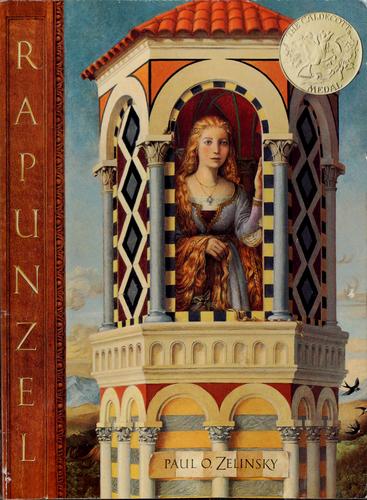
Paul O. Zelinsky’s richly illustrated retelling of the German folktale follows Rapunzel, a girl with long golden hair who is taken by a sorceress and kept in a secluded tower, where only the sorceress can reach her—until a prince hears Rapunzel’s singing. Rendered in an Italian Renaissance style, the book includes an author’s note on the tale’s origins.
Setting: A fairy-tale kingdom evocative of Renaissance Italy, including a secluded forest tower and a walled town.
Readers also enjoyed
Frequently Asked Questions
Is Rapunzel right for my child?
It depends — here's what to consider for Rapunzel. The reading level is AR 4.8, which is typical for 4th grade. The interest level is rated Lower Grades (K–3), meaning the themes and content are designed for ages 5–9 (K–3rd grade). Themes include freedom vs. captivity, love and loyalty, power and control.
How long does it take to read Rapunzel?
At a typical 4th grade reading pace, Rapunzel takes around 11m to finish. The book has 1,602 words. Slower or faster readers may vary significantly.
Does Rapunzel have an AR quiz?
Yes — Rapunzel has an AR quiz available, worth 0.5 points. Your child will need to take and pass the quiz through their school's Accelerated Reader program to earn credit. The quiz is typically 5–20 multiple choice questions about plot, characters, and setting.
What grade level is Rapunzel?
Rapunzel has an AR reading level of 4.8, which places it at a 4th grade reading difficulty. The interest level is rated Lower Grades (K–3) — this reflects the age-appropriateness of the content and themes, not just the reading difficulty. A strong younger reader may handle the words fine while the themes are aimed at an older audience, or vice versa.